


Play Nine: Golf Card Game
4.5926.00 Reviews
App Specs
- Version
- 5.13
- Updated On
- License
- Free
- Downloads
- 100,000+
- Developer
- Bonfit
- Categories
- Card
- Platform
- Android
Screenshots

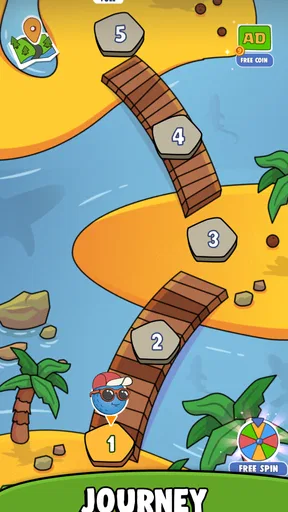
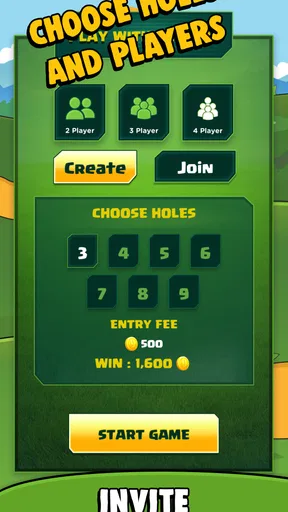
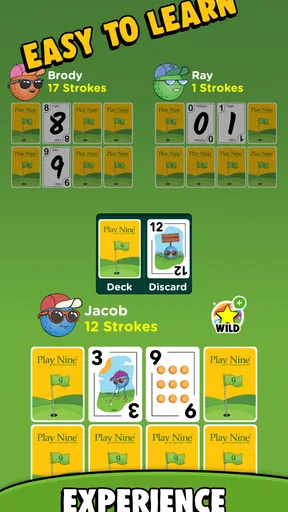

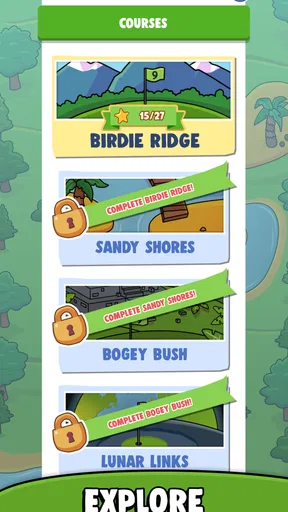

 Analysis by AppCompare
I enjoy card games that are easy to explain but still give everyone at the table something to think about, and Play Nine: Golf Card Game fits that mood well. It turns golf scoring into a light card-game format, so the goal is not to build the biggest score but to finish each round with as few points as possible. That simple twist makes it approachable for family play while leaving enough room for timing, memory, and a little risk-taking.
I spent time with it as a casual mobile game rather than treating it like a serious strategy title. That distinction matters. This is a game for filling a short break, passing a phone around, or keeping a relaxed group entertained. It is not trying to replace a deep collectible card game or a full golf simulation. Its appeal comes from being quick to understand, visually uncomplicated, and suitable for players who may not normally play card games.
Bonfit presents it as a free card game for everyone, with a current version of 5.13 and support for Android 8.0 or later. The listing shows a 4.5 average from around 11 thousand ratings, while its install count has passed 100 thousand. Those figures suggest that the game has found a solid audience without needing to be framed as a large, competitive platform. I think that is the right way to approach it: a friendly tabletop-style diversion that happens to live on a phone.
How the golf idea changes a familiar card game
I find the golf theme most useful as a quick way to explain why low scores matter, rather than as a layer of golf rules to learn. That framing also helps a group decide whether it wants a relaxed round or a more watchful contest, since the same simple objective supports both styles. With that expectation set, the next question is how comfortably the game fits into ordinary phone use.
A low barrier to entry
The clever part of Play Nine is the way it borrows the language of golf without requiring knowledge of golf rules. In a normal card game, players often chase high combinations or try to empty a hand. Here, the golf comparison encourages a different instinct: every card contributes to your score, and lower is generally better. That gives new players an immediate mental picture even before they understand every tactical choice.
When I introduce this kind of game to someone, I do not need a long explanation. I can describe the broad objective, demonstrate a turn, and let the player learn through the next few decisions. That makes it especially useful for mixed-age groups. A younger player can participate quickly, while an experienced card player can start thinking about probability and what opponents may be holding.
The game works best when everyone accepts that it is casual. The rounds are not designed to create a dramatic tournament atmosphere every time. Instead, the pleasure comes from small reversals: improving a weak position, deciding whether to keep a useful card, or watching another player take a chance that does not work out. I found those moments more satisfying than the basic rules might suggest.
Worth Reading Before You Choose

EA SPORTS FC Mobile 26 Is a Bigger Football Game, but It Takes Time

Flipboard Shows What News Apps Must Do Beyond the Feed

Switching to Android Auto Means Rethinking Your Driving Routine

Google Calendar Makes a Crowded Week Easier to Manage

Ludo King Makes the Most of the Minutes Between Plans

Baby Panda World Brings Quick Play to Modern Phones, but Its Game Library Feels Busy
Where the decisions actually matter
Although the rules are approachable, the game is not completely automatic. You still need to judge whether a visible opportunity is worth pursuing and whether an unknown card is worth the risk. A safe choice can protect a decent score, but a bolder move may be necessary when another player appears to be ahead. That push and pull gives the short sessions their personality.
One useful habit is to avoid focusing only on your own cards. Watch the rhythm of the table. If another player repeatedly chooses a particular type of card or hesitates before replacing one, that behavior may tell you more than a single lucky draw. This is not a complex bluffing system, but paying attention makes the game feel less random and helps experienced players find an edge without making beginners feel overwhelmed.
Another practical tip is to decide early whether you are playing for a respectable score or trying to recover from a poor start. Those are different approaches. Protecting a modest advantage usually calls for conservative choices, while recovering may require accepting uncertainty. I like that the game allows both styles, even though chance still has a meaningful role.
What a typical session feels like
A realistic use case is a family waiting for food at a restaurant. One person opens the game, explains the scoring idea, and the phone moves around the table as each player takes a turn. Nobody needs to commit to a long campaign, and a new participant can join without having missed a complicated story or progression system. The same setup works during a commute break, provided the player has enough attention to follow the cards.
It is also a good option for two friends who want something more interactive than scrolling through separate apps. The decisions are small enough to keep conversation going, yet meaningful enough that players are not simply waiting for the next animation. For me, that balance is one of its strongest qualities.
The trade-off is that players looking for a constantly changing experience may find the basic loop repetitive. The game’s charm depends on enjoying the same core contest across multiple rounds. If you need elaborate campaigns, character abilities, or a large collection to manage, this will feel deliberately modest rather than richly layered.
Speed, stability, and everyday performance
I judge everyday performance here by how easily a group can keep the cards and turn order in mind, not by visual spectacle. A practical tip is to place the phone where everyone can see it and agree to pause before handing it over; that small routine reduces confusion when attention shifts. Those habits matter more than chasing a flawless uninterrupted session, and they shape how the game feels over repeated rounds.
Speed expectations for casual play
Play Nine is built around card decisions rather than a visually demanding world, so I approach it as a lightweight game. The important performance question is not whether it delivers console-style graphics; it is whether a player can open it, understand the current state, and complete turns without the experience feeling unnecessarily slow. In that role, the design makes sensible demands. There is no reason to expect the same resource pressure as a large three-dimensional game.
The pace also depends on the people playing. A confident group can move through turns briskly, while beginners may pause to compare options and understand scoring. That is not a performance problem, but it can make a session feel slower during the first few rounds. I recommend letting new players take their time once, then encouraging quicker decisions after they recognize the pattern.
For short breaks, the game’s format is more important than raw speed. A player can make progress through a compact session instead of needing to reserve a long uninterrupted block. That makes it a better fit than many strategy card games that require extensive deck preparation or a substantial commitment before the first meaningful decision.
What happens during heavier use
The most demanding moment is likely not a single round but repeated play with several people sharing the same device. In that situation, the practical strain comes from keeping track of whose turn it is, passing the phone comfortably, and avoiding accidental taps. I found that a stand or a flat surface helps more than any performance trick because it keeps the screen visible and reduces handoffs.
Longer sessions can expose a different limitation: the simple format may begin to feel familiar before the group is ready to stop. This is where I would rotate in another game rather than forcing Play Nine to carry an entire evening. It works particularly well as a warm-up, a filler between activities, or a final low-pressure game after something more demanding.
If you are playing repeatedly to improve your personal decisions, keep a mental note of why you took a risk rather than judging the result alone. A bad outcome does not automatically mean the choice was wrong, and a lucky draw does not prove that a risky move was wise. That small change in approach gives the game more depth during heavy use without requiring any extra tools or complicated tracking.
Reliability and recovery
For a casual card game, reliability is mostly about preserving the clarity of the current round. Players need to know whose turn it is, what cards are available, and how the score is developing. A clean board matters more here than flashy effects. When the interface communicates those essentials clearly, it is easier to return after a brief interruption and remember what you were doing.
That recovery point is important on a phone. Real use is rarely uninterrupted: a message may arrive, someone may ask a question, or the screen may lock while the group is deciding. I would treat the game as best suited to sessions where players can keep an eye on the device rather than assuming every interruption will be invisible. If you are playing competitively with friends, it is sensible to agree on the current state before leaving the screen.
I also prefer restarting a casual round rather than becoming frustrated if an interruption makes the state unclear. The game’s low-commitment format makes that practical. This is one reason I would not compare it with a long-form digital card campaign, where losing progress or reconstructing a position could be much more painful.
Device constraints and compatibility
The Android requirement begins at version 8.0, which makes it accessible to many older devices while still excluding phones that have not been updated for a long time. If you are installing it on an older handset, the main things I would consider are available storage, battery condition, and whether the phone handles ordinary apps comfortably. A lightweight card-game concept should not be confused with a guarantee that every old device will behave identically.
The game is free to download, which makes trying it with family or friends easy. However, in-app purchases range from $1.99 to $39.99 per item. That is worth remembering if a child will use the device or if you prefer games with no optional spending at all. I would review the purchase settings on the phone before handing it to a younger player, especially because the content rating is Everyone and the game is naturally suitable for a broad audience.
The age rating is one of its practical strengths. Parents can consider it for shared play without the mature themes associated with many popular mobile games. Still, age suitability and spending suitability are not the same thing. The game is appropriate for everyone in content terms, but adults should remain aware of the purchase model when children are playing independently.
How it compares with usual alternatives
Compared with a traditional physical card game, Play Nine removes the need to carry a deck and gives the group a ready-made playing surface. That is convenient when you are traveling or waiting somewhere, but it also means the experience depends on the phone. A physical deck is easier to customize, easier to see from across a table, and never runs out of battery. The app wins on portability and setup time.
Compared with solitaire-style games, this title is more social because the fun comes from watching other players make choices and react to the changing score. If you normally play cards alone, it may feel less convenient because it works best when other people are present. On the other hand, if you want a shared activity that does not demand constant conversation, it offers more interaction than a solo puzzle.
Compared with collectible card games, the attraction is its restraint. You do not need to learn a large card pool, build a deck, or understand a long list of special effects before participating. The downside is equally clear: players who enjoy customization and deep strategic variety may outgrow it. I would choose Play Nine for accessibility and social pace, not for endless content discovery.
Who should try it and who should skip it
I would recommend it to families, casual card players, and friends who want a quick shared game with rules that can be explained in ordinary language. It is particularly suitable when the group includes people with different gaming experience. The golf scoring theme gives the game an identity, but nobody needs to be a golfer to enjoy the decisions.
I would be more cautious about recommending it to someone who wants a highly competitive online ladder, a story-driven adventure, or a game with extensive long-term progression. It is also not the best choice for a person who dislikes luck influencing outcomes. Good decisions can improve your chances, but they cannot remove uncertainty from a card game.
Players who dislike optional purchases should also think about whether a free game with items priced up to $39.99 fits their habits. The download cost is zero, but the spending model still deserves attention. For a child’s device, I would set purchase controls first rather than relying on the game’s Everyone rating as a complete safeguard.
My performance verdict
After looking at it as both a game and a phone app, I see Play Nine as a focused, low-demand choice for short social sessions. Its strongest performance quality is not spectacle but proportion: the card-based format should be approachable on ordinary compatible devices, and the game asks players to concentrate on decisions instead of managing a large system. That makes it easy to recommend when speed, simplicity, and shared play matter more than visual ambition.
The limitations are equally practical. A simple loop can lose its freshness during long sessions, interruptions can be awkward when several people are sharing one screen, and optional purchases mean the free entry point is not the whole spending story. Those issues do not ruin the experience, but they define the right expectations.
Bonfit has made a game that works best when treated like a portable tabletop activity rather than an all-purpose mobile hobby. I would install it for a family visit, a quiet gathering, or a short wait with friends. The combination of golf-inspired scoring, accessible card play, and an Everyone rating gives it a clear audience. My recommendation is to try it when you want a friendly, low-pressure card game, while choosing a deeper alternative if you need extensive progression or serious competition.
In the end, Play Nine: Golf Card Game succeeds because it understands its scale. It does not need to overwhelm the player with systems or effects. It offers a small set of decisions, a reason to watch what others do, and enough uncertainty to keep a round lively. For me, that is a worthwhile use of a phone when the goal is simply to share a few enjoyable minutes.
Pros
- Quick rounds fit well into short breaks or casual play sessions.
- Simple rules make it easy for new players to start playing quickly.
- Strategic card choices add more depth than a typical luck-based card game.
- Pass-and-play support makes it suitable for playing with friends nearby.
- The golf theme gives the game a distinctive and relaxing presentation.
Cons
- Luck can strongly influence results
- even when cards are played carefully.
- Games may feel repetitive after extended sessions without enough variety.
- Some features or content may require watching ads or making purchases.
- The small play area can feel cramped on phones with smaller screens.
- Online competition may be limited compared with larger multiplayer card games.
FAQs for Play Nine: Golf Card Game
What is Play Nine: Golf Card Game, and how is it played?
Play Nine: Golf Card Game is a casual digital card game inspired by the scoring system of golf. The goal is to finish with the lowest score after nine rounds, or “holes.” Players draw and replace cards, trying to create matching pairs and low-value combinations in their layout. It is easy to learn, but choosing when to reveal, swap, or keep cards adds a useful layer of strategy.
Can I play Play Nine: Golf Card Game offline or without creating an account?
Play Nine is designed as a convenient pick-up-and-play experience, making it suitable for quick games at home or while traveling. Availability of offline play, guest access, and account requirements can depend on the current app version and platform. Before downloading, check the store listing and the game’s opening screens, especially if you want to play without signing in or using an internet connection.
Does Play Nine: Golf Card Game support multiplayer?
The game is primarily appealing because it can recreate the social feeling of a tabletop card game on a phone or tablet. Depending on the version, players may be able to compete with friends, family members, or computer-controlled opponents. Multiplayer options, invitations, matchmaking, and local play can change through updates, so review the latest store description before installing if playing with others is your main reason for downloading.
Is Play Nine: Golf Card Game suitable for children and beginners?
Yes, the basic rules are approachable for beginners, since the central objective is simply to reduce your total score across nine rounds. The interface and turn-based structure generally make it easier to follow than fast-paced card games. Younger players may still need help understanding card values, matching rules, and strategic decisions. Parents should also review the app’s age rating, advertisements, and any online or purchase features.
Are there advertisements or in-app purchases in Play Nine: Golf Card Game?
The presence of advertising, optional purchases, or premium features may vary according to the platform, region, and version installed. Some editions of casual card games offer free access supported by ads, while others may include paid upgrades or purchases to remove interruptions. Check the Google Play or App Store listing for the latest pricing information, then review the in-app purchase settings before allowing children to use the application.


